

Complete Analysis of Slurry Pump Packing (Gland Packing): Selection, Installation, Maintenance and Troubleshooting
In mining, coal washing, power ash removal and chemical engineering, slurry pumps are core equipment for transporting solid-containing, highly abrasive slurries. Their sealing performance directly affects operation stability and maintenance costs. As the most cost-effective sealing method, packing (gland packing) is widely used for shaft end sealing due to its simple structure, easy installation and low cost. This article outlines key points of slurry pump packing.
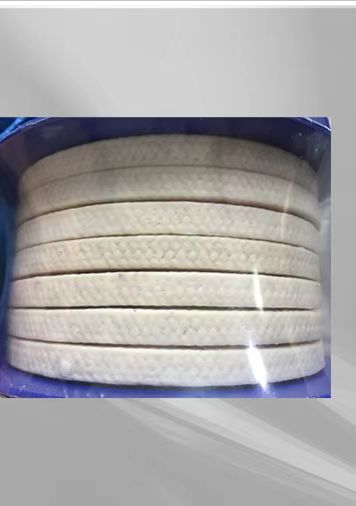
I. Understanding Slurry Pump Packing
Slurry pump packing is a flexible seal between the pump shaft and stuffing box, woven from fiber substrates (aramid, carbon fiber) and impregnant (graphite, PTFE). Its core functions are to block slurry leakage, lubricate and cool the shaft, and isolate impurities. Compared with mechanical seals, packing is simple, easy to replace and low-cost, but it has slight normal leakage that requires regular maintenance.
II. Packing Selection Guide
Packing selection depends on slurry composition, temperature, pressure and rotation speed, following the principle of "material matches medium characteristics".
(I) Common Materials & Scenarios
The recommended material for most slurry pump scenarios is aramid, which features high wear-resistance and can withstand temperatures up to 250℃, making it suitable for mining, coal washing and other high-abrasion slurry transportation. Carbon fiber packing is suitable for high-temperature (up to 350℃) and strong corrosion scenarios, as well as high-speed working conditions. PTFE packing has extreme corrosion resistance and can tolerate temperatures up to 260℃, which is ideal for the chemical industry and corrosive slurry transportation. Graphite packing, with a high temperature resistance of up to 450℃, is only suitable for auxiliary sealing in high-temperature and high-pressure environments.
(II) Three-Step Selection
- Clarify key working conditions, including slurry composition, operating temperature, stuffing box pressure and pump shaft rotation speed;
- Match materials according to working conditions: aramid for high-abrasion scenarios, PTFE for corrosive media, and carbon fiber for high-temperature or high-speed conditions;
- Prioritize pre-impregnated packing for better lubrication; use molded packing rings for high-pressure working conditions.
Reminder: Check shaft sleeve smoothness (≤Ra 0.8μm) before packing installation; replace worn sleeves to avoid premature packing failure.
III. Correct Installation
Improper packing installation can easily cause slurry leakage and equipment damage. Follow these simple steps for correct installation:
- First, clean the stuffing box thoroughly to remove impurities, then inspect the shaft sleeve—replace it if the wear depth exceeds 0.5mm;
- Cut the packing at a 45° bevel, then install it circle by circle, ensuring that the cuts of adjacent circles are staggered by 90°~120° to prevent leakage channels;
- Tighten the gland bolts diagonally evenly, adjusting to an initial state of slight dripping (30~60 drops per minute), then start the pump for a test run and fine-tune the tightness if necessary.
Taboos: Do not wind multiple circles of packing together for installation; do not tighten the gland bolts all at once, as this may cause packing burnout or shaft sleeve wear.
IV. Maintenance & Troubleshooting
(I) Daily/Regular Maintenance
Proper maintenance can extend packing service life and reduce maintenance costs. For daily inspection, ensure the packing leakage is within the normal range (30~60 drops per minute) and the shaft temperature is below 60℃. Weekly maintenance includes tightening loose gland bolts and cleaning the shaft seal water pipeline to prevent blockage. Monthly maintenance involves replacing the packing if its wear exceeds 1/3 of the thickness, and lubricating the contact between the packing and shaft sleeve every 1~2 months.
(II) Common Troubleshooting
For excessive packing leakage, the solution is to replace worn packing or shaft sleeve, tighten the gland evenly, and re-install the packing with staggered cuts. If the packing overheats or smokes, loosen the gland to restore slight dripping and unblock the shaft seal water pipeline. For rapid packing wear, replace it with a material suitable for the working conditions, repair or replace the rough shaft sleeve, and calibrate the pump shaft to reduce vibration.